Learn to Share – for Profit
Assessing opportunities in the rental business
“My parents lived in the ownership economy. Today, young adults have less desire to own things; they grew up with Airbnb and Uber,” said Josh Nickell, vice president of the equipment segment for the American Rental Association.
It’s no surprise that a leader in a trade association focused on equipment rental is an advocate for rental operations. But Nickell is not wrong. People have been shifting to the “sharing economy” since the launch of the Airbed & Breakfast website in 2008. Founders changed that name a year later. And since then, Airbnb hosts have earned more than $250 billion worldwide.

Does this apply to equipment rental? It’s true that the “sharing economy” models such as Airbnb and Uber involve actual sharing. Here, someone owns a thing (like a vacation home, car, or skid-steer loader) and because they use it infrequently, they can share (think, rent) its use for any amount of time they like. They own it and make money sharing it.
Equipment rental is different but not much. The rise in public acceptance of the sharing economy reduces barriers to renting anything. Where it used to be cool to own everything, this sharing economy and a trend away from consumption makes renting okay, cool even. But it’s not really about sharing, not at all. It’s about access. And equipment rental businesses increasingly provide that access to everyone from weekend DIYers to landscape contractors.
The Equipment Rental Economy
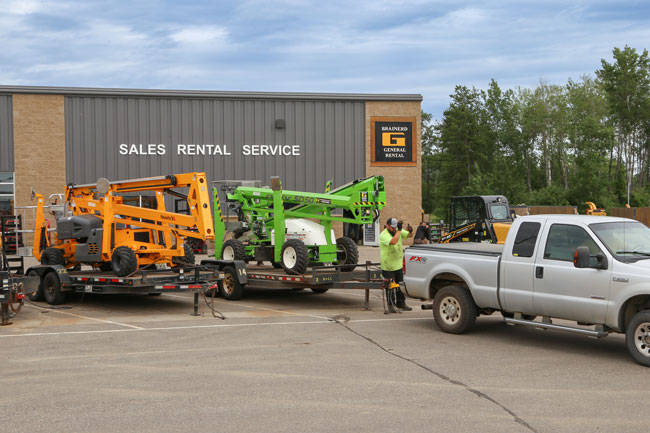
The American Rental Association (ARA) separates rental into event rental (party tents, chairs, etc.) and equipment rental. “Our equipment rental members serve two markets,” said Nickell. “The DIY market is roughly 20% and the pro contractor market makes up about 80%. That varies by location and business. We are seeing more companies get into equipment rental. It’s essentially the sharing economy, with an intermediary.”
Nickel said some rental companies dabble in sales. “About 30 to 40 percent of our members are retailers to some degree. Outdoor power equipment is one of the most common tack-ons for our members,” he said. “For some 50% or more of their business is in equipment sales.”
“Because equipment rental is done in person, the business is a good relationship builder for equipment retailers,” said Nickell. “Equipment retailers are facing heavy competition from large national retailers and ecommerce sales. This impacts all retail businesses. And it is driving OPE dealers and local hardware stores to get into the rental business.” United Rentals is the world’s largest equipment rental business. The publicly traded company reported revenue in Q1 2024 of nearly $3 billion.
OPE dealer viewpoint
When I first talked with Matt Bridges, owner of 3B Outdoor Equipment in Monroe, La., he couldn’t talk for long. “I’m meeting with an attorney to talk about another rental business opportunity,” he said. Bridges currently operates two locations in Monroe, and he’s looking at a third. Both current sites sell new equipment and rent a range of equipment. When he called me back, I asked if he’d recommend the rental business to other OPE dealers.
“You have to look at the possible tax advantages. I’m a numbers nerd,” he said, “and anybody with a little sense knows that you can work this to your advantage. There are a lot of depreciating assets.”
Many of his rental customers are landscape professionals. “We want to be a one-stop shop. To do that, I have to manage the cash flow correctly. It’s all in the way the business is set up,” he said. “I keep the rental company separate from the outdoor equipment company. And they do business with each other for equipment sales and service and repairs.”
A rental-first perspective
I visited Steve Mau at his business Brainerd General Rental near Brainerd, Minn. This is Minnesota Lakes country. From here to about 40 miles north is cabins, vacation homes and “up north” resort getaways surrounded by woods and lakes. With lots of activity around renovating cabins and landscaping around vacation homes, it’s a good place for a rental business – at least for six months each year; it is Minnesota.
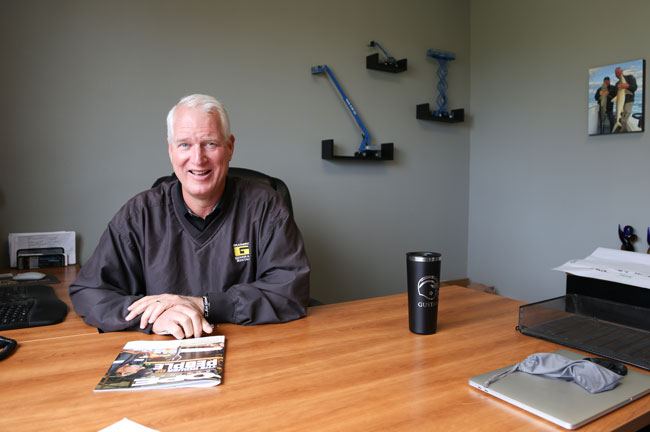
Mau’s business is split to roughly 70% rental and 30% retail; Brainerd General is also a retail dealer for Toro, Yanmar and ASV skid steer loaders. “Our principal focus is the rental market, but we supplement that with sales,” said Mau who has owned the business for 22 years. “We are talking to the same people. Our customers rent, but they may purchase someday, too.”
During and after the pandemic, the equipment rental business experienced significant gains, according to Mau. People stayed at home, invested in staycations, moved to or purchased second homes, and rented a variety of equipment in the process. “We are in a vacation destination,” said Mau. “People moved up here, then wanted to make upgrades.”
Professional contractors needed equipment too; they still do. “We rent equipment to a lot of landscapers and contractors whose businesses are growing,” said Mau. Landscapers are renting Dingos, trenchers, stump grinders, plate compactors, overseeders. Plus, excavators with different attachments or even just attachment themselves. We find that businesses in the half million dollar to $3 million size are our bread and butter. Businesses larger than that own a fleet of equipment.”
Should you rent?
Bridges of 3B Outdoor in Louisiana does recommend the rental business for OPE dealers but doesn’t want to oversimplify the opportunity. “It depends. The rental business is capital intensive, and very heavy on the front end,” he said. “It’s a little more difficult right now, with cost of money. You need to have a five-year plan.”
To rent equipment such as sod cutters and aerators, what Bridges calls “weekend warrior equipment,” you have to pay for that upfront when you purchase. When you get into bigger equipment like skid steers, Bridges said you can get zero-percent financing. “You have the flexibility to use other people’s money.”
I asked John Reynolds, owner of the Bunnell, Fla. businesses Flagler Power Equipment and JB Rent-All, the same “would you recommend rental” question. “Maybe,” he said. “An equipment rental business operates very differently from power equipment sales. You need to have separate dedicated folks to run it. It is a big investment but can be profitable if run well.”
The ARA tracks rental penetration in markets, and Nickell says that it’s currently at a record high of 56% in the construction market. “Complexity of repair is a real problem with ownership of some equipment,” he said. “Insurance is expensive for owners, some equipment is difficult to move around, job sites are unique and require different machines. All that means rental activity is increasing.”
Advice & tips
If your customer base is a lot of landscapers or construction pros, you are probably missing out on the business. “They are probably renting already from a business near you,” said Nickell. He suggests you find out what they’re renting now. And look at what you sell. There are three characteristics of equipment than can make pro users reluctant to buy, and apt to rent. Equipment that is, first, expensive to buy; second, large and challenging to store; and third, difficult for owners to maintain.
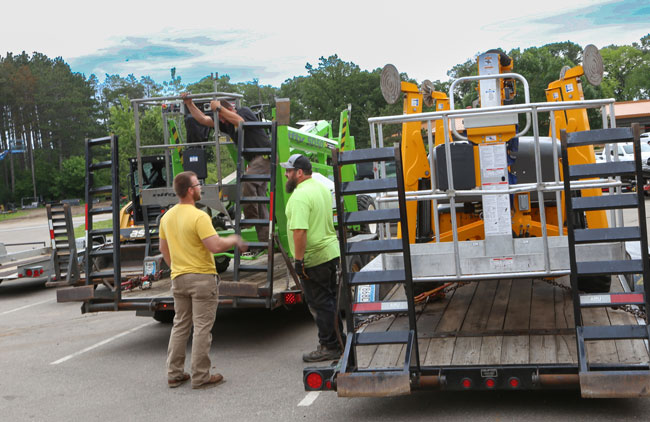
Brained Rental tracks data for its rental equipment, and most important among that is “utilization.” “We have an asset that has a dollar value, and we talk about utilization,” said Mau. “That determines the effective value of us owning the piece of rental equipment. The rental model works only if we can keep turning units, keep them in utilization between 60 and 80 percent.”
Mau gives an example: “If a piece of equipment rented 100 percent of the time could earn $1,000 a week, and it in reality brings in $600, that’s 60% utilization, and it’s in the acceptable range. If it actually earns $900, then we should buy another piece of that equipment to rent. If it brings $200 a week, that’s too low, and we should not it in our fleet. We would sell it and invest in something with a higher utilization.”
Nickell backs up Mau’s accounting and adds that an average piece of equipment will pay for itself every 15 months. “On average, equipment in general earns 30 to 40 percent EBITDA margin,” he says, though he admits it generally earns fewer dollars per sq. ft. than a retail business. “It’s higher profitability than equipment sales. And you can sell the equipment after a few years.”
A rental business is more profitable at scale,” said Nickell, “and it’s better when it’s more complex. I would say that rental is not something you want to dabble in. You have to commit to this business. It might take you a few hundred thousand dollars to pilot this. And that can help you hire the staff and mechanics you need to do this well.”
Downsides to rental operations
Along with the initial investment needed to get started, rental businesses do have some downsides to consider. “The worst part is that renters do not care about the equipment,” said Reynolds, of JB Rent-All in Florida.
Mau acknowledges that owners need to spend time making sure both weekend warriors and pros know how to properly and safely use the equipment. “A primary learning I would share is to create ways to inform people on how to use the equipment so it goes out and comes back. It can be a delicate situation. People are impatient, they know the rental is on the clock.” Mau said he tells people they should come in before Saturday morning when they are in a hurry and get some training.

Theft of equipment has been a problem for some rental businesses. Sheriffs in Polk County, Florida arrested a group of criminals in 2023 for stealing more than $1 million of tools and equipment from Home Depot stores in the area. Another Florida man was arrested in Broward County this year for stealing $460,000 worth of equipment from Home Depot. “This can be a real risk in some parts of the country,” said Nickell.
Rental operators also need to own trailers and provide delivery service. “We deliver to contractors and to homeowners,” said Matt Bridges. “Everybody is busy. And a lot of people today don’t know how to pull a trailer. This is a service we have to provide. This is a cost for my time, my truck, insurance and fuel, but it’s another revenue stream.”
Is it right for you?
The upsides and downsides of the rental business (not comprehensive lists) might look like those for a retail business or a service business. Interested people need to consider if they have the physical space, too, to properly run a rental operation.
The overall economic and social trends are clear, and they point to higher acceptance of renting. While ownership of both land and equipment has long meant control and autonomy. And it still can. But it comes at a cost. And people today are increasingly proving with their pocketbooks that the sharing economy enables freedom, creativity and innovation.