Expert insights for choosing landscape business software
For an inside look at end-to-end software for running your landscape business, OPE+ recently spoke with Eli Zevin, general manager at Aspire, a ServiceTitan company.
OPE+: Can you provide us with an overview of your product and its features, especially any recent updates?
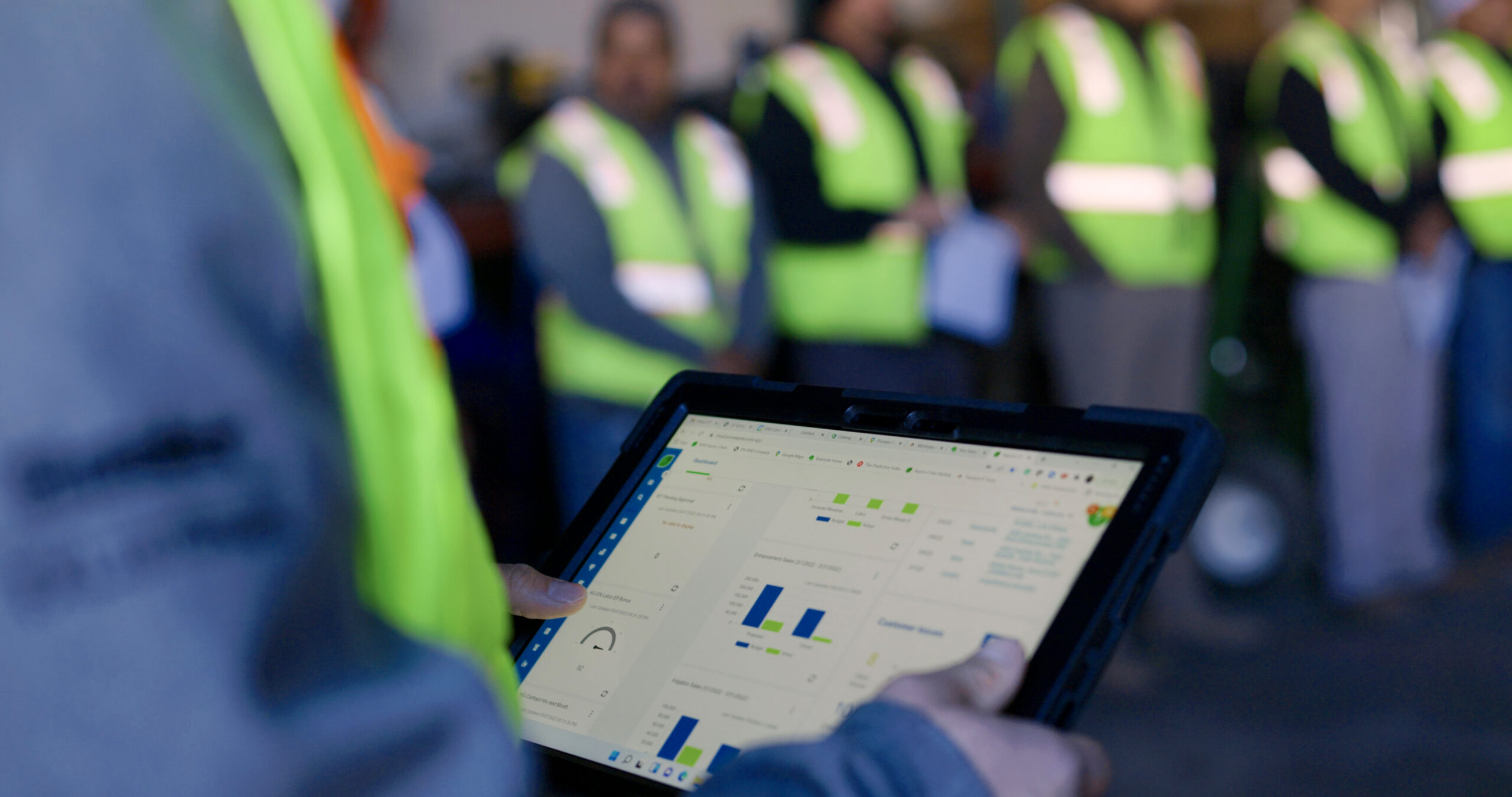
Zevin: Aspire is a business management platform built specifically for commercial landscaping, snow and ice management, and landscape construction companies. The platform covers the full operational lifecycle – estimating, scheduling, field execution, job costing, billing and reporting – all in a single system. That end-to-end design is intentional. When everything lives in one place, data flows automatically across the business rather than being manually reconciled between disconnected tools.
Our most recent major investments have been in construction management, giving contractors better visibility and control over large installation projects alongside their recurring maintenance operations. We’ve also continued building out our field documentation capabilities, including site audits that help operators capture proof of service, flag enhancement opportunities, and build a defensible record at every property. Both reflect the same underlying focus: giving landscape businesses the real-time financial and operational data they need to actually run a profitable company.
We’re hyper-focused on making sure customers get value from the platform they’ve already invested in. The depth of Aspire’s functionality means there’s a lot to unlock, and we’re committed to being the kind of partner that helps operators get there.
OPE+: What are the benefits to landscape professionals of implementing an end-to-end software solution?
Zevin: The core benefit is simple: you stop making decisions based on incomplete or stale information. When estimating, scheduling, field operations and financials all feed into a single system, what you see in your reports actually reflects what’s happening in your business – not what happened three weeks ago after someone reconciled spreadsheets.
For landscapers that matters a lot. Margins in this industry, especially in maintenance, are tight enough that a route running 15% over on labor for a few months can wipe out your profit on that contract before you even know there’s a problem. With real-time job costing built into the workflow, you catch that in week two, not month eight.
The other thing I hear from operators is the cost of running too many systems. Our 2026 Commercial Landscape Industry Report found that 90% of commercial landscaping companies use at least four software platforms to run their businesses, and 61% use seven or more. Every handoff between those systems is a place where data gets lost, delayed or miscommunicated. A unified platform doesn’t just save time; it changes the quality of the decisions you’re able to make.
OPE+: What are the biggest issues facing landscape industry professionals in 2026, and how can software and related technologies help address those challenges?
Zevin: Labor is still the biggest one. About 54% of contractors cite recruiting and retaining staff as their top business risk, and that number hasn’t moved much. Software doesn’t replace people, but rather makes the people you have more productive. Better route density, tighter scheduling, real-time visibility into where crews are and whether they’re on pace; all of that compounds over a season.
The second challenge is what I’d call fragmentation tax, which is the hidden cost of running too many disconnected systems. It shows up as billing delays, reporting errors, and management decisions made on outdated information. For companies trying to scale, that friction gets worse, not better, as you add revenue.
And then there’s the financial pressure side. Costs are up across the board: fuel, materials, labor and insurance. Commercial clients aren’t always willing to absorb those increases. Companies that know their actual job costs in real time have the ability to identify which contracts need to be repriced at renewal and which service types are consistently underperforming. Companies flying blind find out at year-end when it’s too late to do anything about it.
The technology opportunity here is real, but it requires commitment. A platform sitting at 20% adoption isn’t solving these problems; it’s just another line item.
OPE+: What are the main factors landscape companies should consider when choosing and implementing a software solution for their business?
Zevin: The first thing I’d look at is whether the platform is purpose-built for this industry or adapted from something more generic. Landscaping has specific operational rhythms – seasonal variability, route-based labor, recurring contracts with very specific billing structures, and snow as a completely different operating mode. Generic business software doesn’t understand these natively. A system that enforces landscaping best practices out of the box will drive better outcomes than one that requires you to configure them.
Second, think carefully about implementation and what “going live” actually means. A lot of companies underestimate this. Getting into the system is one milestone; having your crews capturing field data correctly, your managers reviewing job costing weekly, and your billing running on time is where the value is. I’d ask any vendor you’re evaluating, “What does the adoption journey look like, and what does your first 90 days look like in practice?”
Third, think about where your business is going, not just where it is today. A platform that works fine at $5M may create real reporting and configuration headaches at $20M. If you’re growth-oriented or operating in a PE-backed environment, you want a system that scales cleanly and produces the kind of auditable financial data that matters when people are looking at your books.
OPE+: What is the learning curve for the user, and what types of training do you offer?
Zevin: I’ll be direct; there is a learning curve, and anyone who tells you otherwise is likely overselling. Aspire is a deep platform, and getting full value out of it takes time and commitment. The companies that do best in year one are the ones that go into it knowing that and treat the implementation as an organizational investment, not just an IT project.
That said, the learning curve varies widely depending on your role. For crew leaders in the field, we’re talking about a handful of steps in a mobile app: start time, stop time, and log materials. We work hard to keep that experience as simple as possible because we know those folks are standing in a field in 90-degree heat, not sitting at a desk. For office staff and managers, it’s more involved, and that’s where our implementation and support resources are focused.
We offer a full resource library, monthly webinars, office hours, and ongoing access to product experts. Our implementation teams work one-on-one with new customers to build the configuration and workflows correctly from the start, because getting that foundation right is what makes everything else work. Additionally, our customer success teams stay engaged well after go-live, because the real value of the platform tends to compound in year two once operators start leaning into the more advanced capabilities.